

Let me be upfront about something: I did not walk into this experiment expecting to love the Sillbird 12-in-1 Solar Robot Kit. I have been teaching third grade for nine years, and I have watched a lot of "educational STEM toys" arrive at school with bold promises and leave as a heap of confused children and lost pieces. When a colleague suggested I try this one with my class, I said sure, ordered 12 kits, and quietly prepared myself to write a lukewarm review.
That is not the review I am writing. But it is also not a gushing five-star take. What I learned after splitting 24 students into pairs and handing them each a kit is more complicated than either of those things, and I think it is exactly what you need to know before you buy.
The Quick Verdict
A genuinely solid STEM kit for ages 8 and up, but only if you prep the environment right. Cutting corners on setup makes the frustration spike fast.
Amazon Check Today's Price →If your kid has been bored with worksheets, this kit changes the afternoon.
The Sillbird 12-in-1 Solar Robot Kit has 190 pieces and 12 different robot builds. At the current Amazon price, it is one of the more accessible STEM hands-on kits available for this age range.
Amazon Check Today's Price on Amazon →How I Tested This (And Why Classroom Testing Tells You More)
I ordered 12 kits, which Amazon delivered in two boxes the following Tuesday. I opened every one of them the night before and checked for missing pieces. I found one bag with three pieces absent from one kit, which I filled from a spare bag I kept back for exactly this reason. Lesson one: if you are buying multiples, buy one extra to cannibalize for replacements.
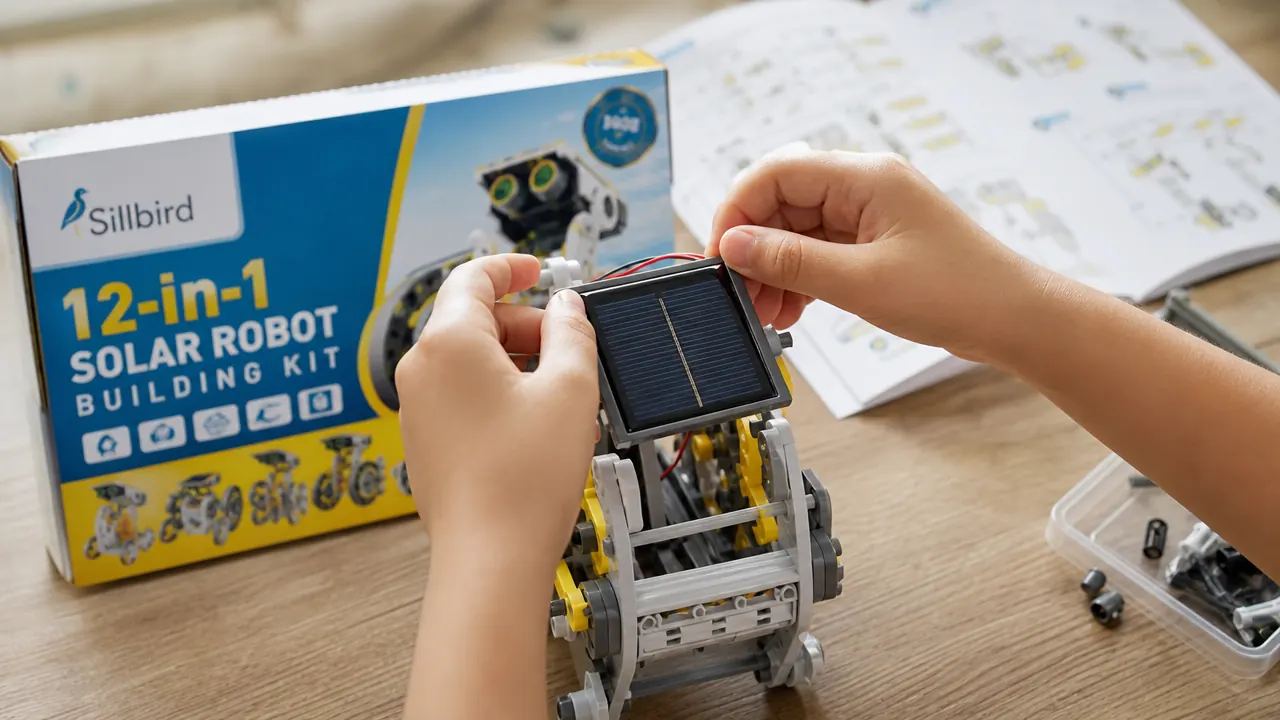
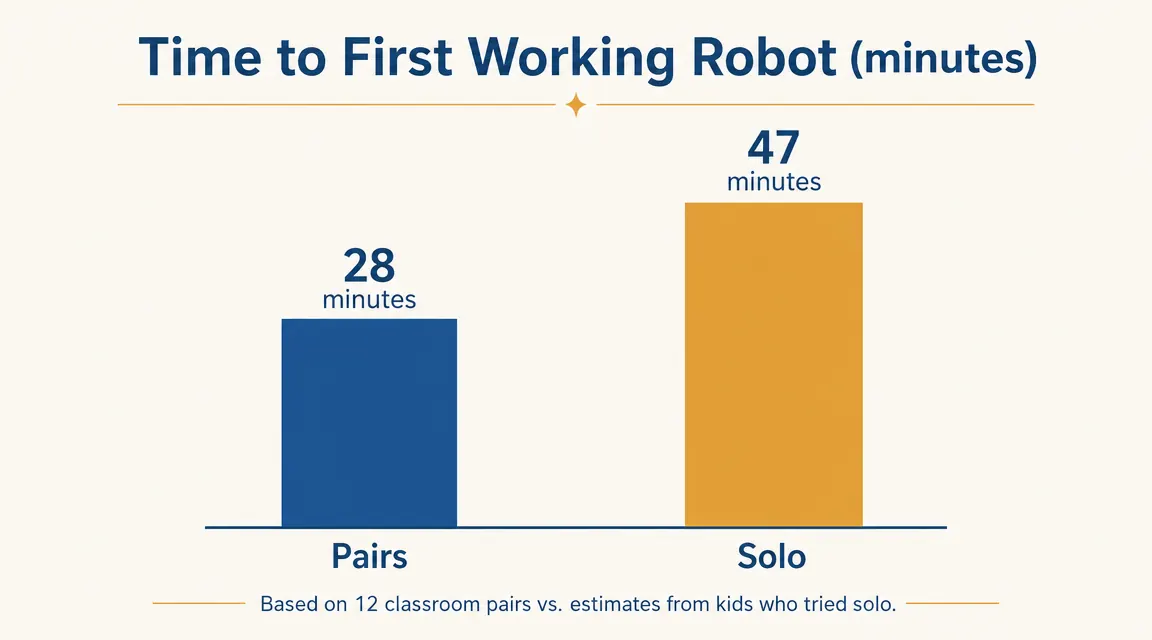
On a Friday afternoon, I cleared four of our six table groups, paired kids up by reading level rather than friendship to see how the instructions held up without a strong reader carrying the pair, and gave each team a kit, a cup of pre-sorted pieces I had organized the night before, and a verbal prompt: build the Solar Tilted Windmill first, the easiest listed configuration. I set a timer. I watched. I took notes on a clipboard.
Here is what I noticed within the first six minutes: three pairs were humming along, four pairs were stuck on the same step (attaching the motor mount to the base frame, Step 4 in the booklet), two pairs had already lost a tiny connector piece under the table, and one pair was arguing about which end of a rod was the correct end. That is a real classroom, not a YouTube unboxing video.
The Instructions: Better Than Most, Not Perfect
I want to talk about the instruction booklet because it is genuinely better than the standard that comes with these kinds of kits. The diagrams are clear line drawings with parts numbered to match the bag labels, and each build has its own chapter so you are not scrolling back and forth trying to figure out which version you are building. My kids who read at a second-grade level could follow along visually even when the text tripped them up.
That said, two issues kept surfacing. First, the scale on some diagrams is misleading. Several kids tried to force a short connector into a slot that required a long connector because both looked similar at the printed size. Second, the booklet assumes you know which way solar panels face. It does not explain that the panel needs direct sunlight to function, not just indoor light, which led to confused kids holding finished robots under fluorescent bulbs and wondering why nothing moved. A single callout box on that point would have saved ten minutes of troubleshooting.
My fix: before handing out kits, I did a five-minute orientation. I held up the solar panel, explained what it does, and walked to the window with it so kids could see the motor spin. That orientation alone cut the dead-end confusion nearly in half.
The instruction booklet is better than most in this category. But 'better than most' still leaves room to trip up a classroom of 8-year-olds.
What Nobody Tells You About the 12-in-1 Feature
The headline sells 12 different robots. That is accurate. What the listing does not make obvious is that most kids will build one, maybe two, and then consider themselves done. In a classroom setting, exactly four of my twelve pairs voluntarily tried a second configuration after finishing the first. The other eight were satisfied and ready to move on. That is not a flaw in the kit. That is kids being kids. But if you are buying this thinking your child will spend a month methodically working through all twelve builds, temper those expectations.
The practical implication: this is a weekend project or a focused two-hour classroom activity, not a long multi-week exploration on its own. If you want the 12-in-1 value fully realized, you need to intentionally structure return sessions. In my class I plan to bring the kits back out once a month, assign a different configuration each time, and treat each as a standalone lesson. That is the model that works. Just handing the kit to a kid and saying "there are 12 builds in there" will likely result in them building one and setting it down.
Build Quality and the Piece-Loss Problem
The plastic on these pieces is firm without being brittle. I had kids snapping parts together and pulling them apart repeatedly, and I did not see a single piece crack during our session. The connectors hold their shape after multiple insertions, which matters because some kids reassembled the same sub-section three or four times before getting it right. With cheaper kits I have tried, that repeated stress fractures the plastic within a session. Not here.
Piece loss, though, is a genuine concern in a group setting. Two kits lost pieces under the table. One kid knocked a cup of pre-sorted parts onto the floor mid-build. I recovered most of them, but I would not trust a full count after a classroom session. My advice for parents: do this on a tray or a rimmed cookie sheet, not an open table. My advice for teachers: use a tray system, and do a partner count of pieces before and after the session using the numbered bag manifest in the booklet.
The solar panel itself is the component I was most worried about, and it held up fine. No delamination, no scratches from being slid around the desk. The motor is small but has a satisfying zip to it once the panel catches light. Hearing a robot you just built start moving under its own power is the payoff moment this whole kit is designed around, and Sillbird delivers that moment cleanly.
Age Range Reality Check
The box says ages 8 to 13. In my experience, that range is accurate on both ends, but the experience quality shifts depending on where a child falls. My eight-year-olds needed a partner and benefited from my orientation walk-through. My kids who were more dexterous (which correlates loosely with age but not perfectly) flew through the first build in under 20 minutes. A child under 7 would likely need a parent sitting alongside for most of the build, and that is fine, but know that going in.
I also noticed that gender had no bearing on engagement. I have seen STEM toys where boys or girls self-select out early. Every pair in my class stayed engaged through the first completed build. That is worth noting for parents shopping for a gift with a specific child in mind.
What I Liked
- Instruction booklet is diagram-heavy and genuinely followable for 8-year-olds with a partner
- Piece quality holds up to repeated assembly and disassembly without cracking
- Solar panel produces a satisfying, immediate response when sunlight hits it
- 190 pieces across 12 builds gives real variety for structured revisit sessions
- Under twenty dollars makes this among the lowest-cost hands-on STEM kits per build
Where It Falls Short
- Small pieces get lost fast on open tables, especially in group settings
- Diagram scale on a few steps is misleading, causing short/long connector confusion
- No explanation of how solar panels work or why they need direct sunlight (not fluorescent light)
- Most kids stop at one or two builds without intentional facilitation to revisit others
- Sorting 190 pieces before a session takes 15 to 20 minutes of adult prep time

The Solar Science Gap (And How to Fill It)
Here is the piece of feedback I have not seen in any other review, and I think it matters most for educators. The Sillbird kit teaches assembly and mechanical thinking well. It does not teach solar energy. The kit assumes kids already understand, or do not need to understand, why the sun makes the motor spin. In a classroom context, that is a missed opportunity.
I spent five minutes before the build session with a whiteboard drawing showing photovoltaic cells converting sunlight to electricity. Forty minutes later, one of my quieter students, a kid who rarely volunteers answers, raised her hand during the debrief and said, "So the solar panel is like a stomach for sunlight." That moment happened because I added a quick science frame that the kit does not include. If you are a parent using this at home, pull up a 60-second explanation of how solar panels work before the build starts. If you are a teacher, slot this into a unit on energy sources rather than using it as a standalone craft activity. The learning depth doubles.
How It Compares to What I Have Used Before
I have used five other build kits in my classroom over the past four years. Two were wind-up mechanical kits, two were circuit-based kits, and one was a magnetic tile set. The Sillbird sits comfortably in the middle of that range for complexity and near the top for engagement payoff per dollar. The circuit kits produced more visible frustration when connections failed without visual feedback, while the Sillbird's solar panel gives instant, unambiguous feedback when the build is correct. That immediate confirmation loop is what keeps younger kids in the game.
For a longer look at how the Sillbird compares side by side with other STEM kits on price and build complexity, see my full comparison piece: Sillbird Solar Robot Kit vs Other STEM Building Kits. And if you want the full three-month parent perspective on daily use at home, I covered that separately in my 3-month Sillbird kit review.

Who This Is For
This kit is a strong buy for a parent or teacher who is willing to spend 15 minutes on prep and a few minutes on orientation before handing it to a child. It rewards a little adult scaffolding with a lot of kid-driven exploration. It is a great choice for a curious 8 to 10 year old who likes building things, a teacher looking for a focused single-session STEM activity, a homeschool family doing a unit on energy or engineering, or a gift for a kid who has worked through simpler snap-together kits and is ready for more pieces and more challenge.
Who Should Skip It
Skip it if you are hoping to hand it to a 6-year-old and walk away. The small pieces require fine motor control and a real tolerance for step-by-step instruction following that most kids under 7 have not developed yet. Also skip it if you want something that will stay engaging for months without adult involvement to re-introduce it. This kit does not have an app, no digital integration, nothing that keeps a child returning unprompted. It is a tool that needs a human to unlock its full value. For some families and classrooms, that is a feature. For others, it is the reason to look elsewhere.
Your kid is ready to build something that actually runs on sunlight.
The Sillbird 12-in-1 Solar Robot Kit is one of the few under-twenty-dollar STEM kits where the payoff moment, watching a robot you built move under its own solar power, is genuinely earned. With a little prep, it delivers.
Amazon Check Today's Price on Amazon →