

My son Marcus is 8 years old, weighs about 58 pounds, and has the attention span of a caffeinated sparrow. I say that lovingly. He is also obsessed with robots, solar energy, and anything that moves on its own without batteries. So when I found the Sillbird 12-in-1 Solar Robot Building Kit in September, I thought it might be worth the gamble. What I did not expect was that three months later, we would still be pulling it out on Saturday afternoons.
I am a third-grade teacher, so I am not easily impressed by educational toy marketing. I also tested two of the 12 configurations with my class, which gave me a very different perspective than just using it at home. This review covers everything: the builds, the failures, the moments of genuine learning, and the honest tradeoffs.
The Quick Verdict
A genuinely educational STEM kit with real replay value and a steep-enough learning curve to keep curious 8-to-12-year-olds coming back, though the instructions need patience and a bright window is non-negotiable.
Amazon Check Today's Price →Still searching for a STEM kit your kid will actually finish?
The Sillbird 12-in-1 Solar Robot Kit has 15,000+ reviews and a 4.3-star rating. It is one of the few kits at this price point that children return to beyond day one.
Amazon Check Today's Price on Amazon →How I Have Used It: Home and Classroom
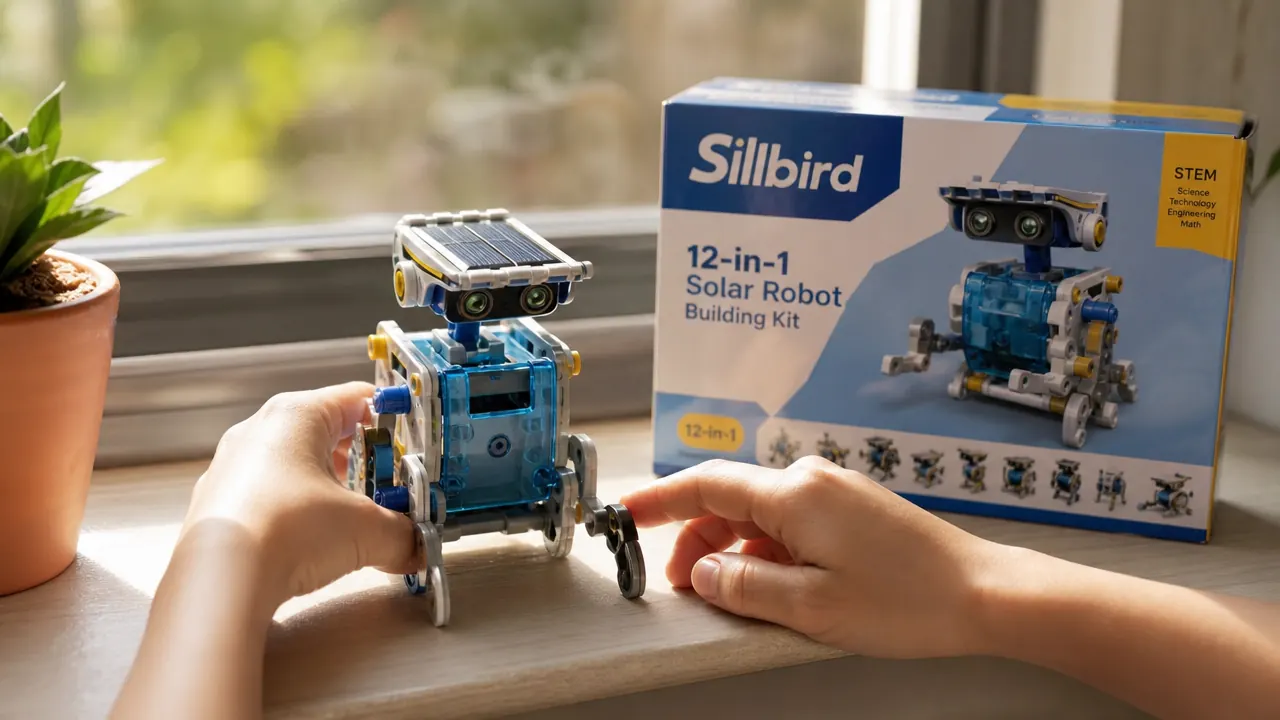
Marcus and I built our first configuration, the crab, on a Sunday morning in September. It took about 50 minutes, one minor meltdown over a stubborn gear, and two cups of coffee for me. We set the finished crab on the kitchen windowsill, and when the sun hit the solar panel, it skittered sideways across the counter. Marcus lost his mind in the best possible way.
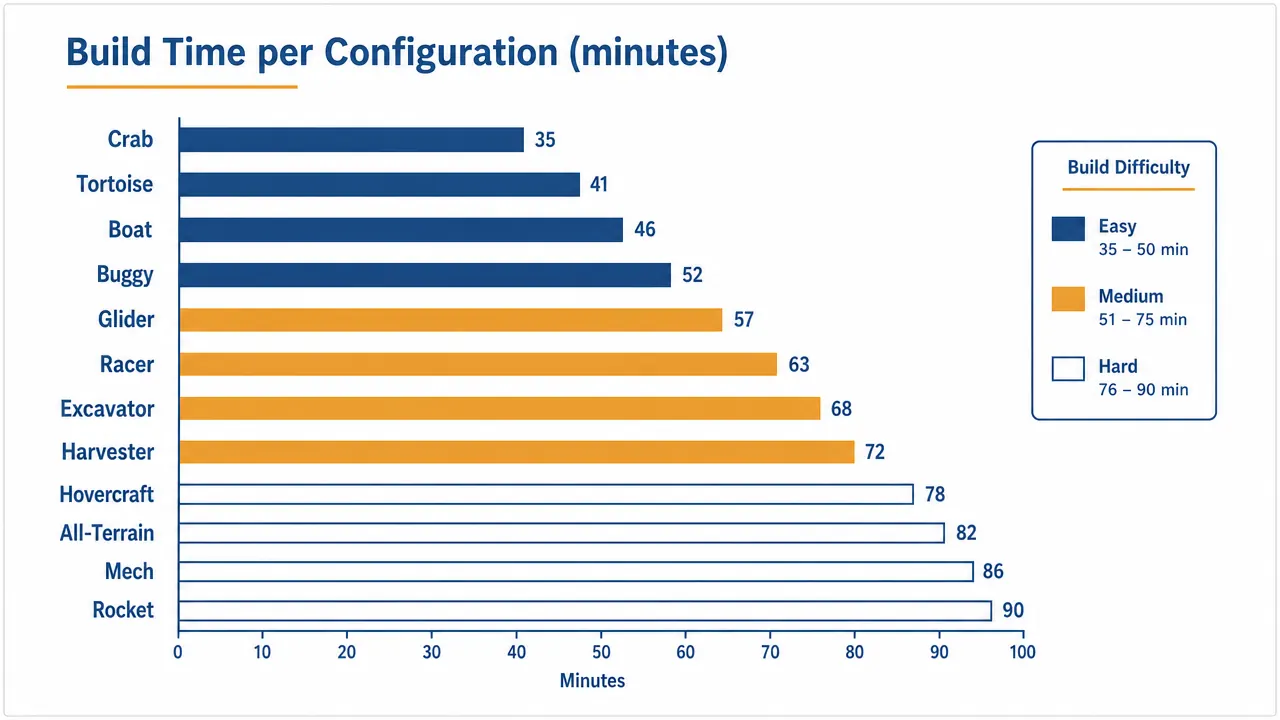
Over the next eight weeks, he built six more configurations on his own, or with minimal help from me. I timed the builds: they ranged from 35 minutes for the simpler wheeled buggy to about 85 minutes for the boat. The instruction manual uses numbered diagrams rather than words, which is smart design for a multilingual product, though some diagrams in the middle section are noticeably smaller and harder to read than the opening pages.
In October, I brought the kit into my classroom during a STEM enrichment block. I split my 24 students into six groups of four and had each group attempt the tortoise configuration. Only two groups finished in the allotted time. The other four groups needed the second session. What surprised me was how collaborative the struggle was. Kids who usually dominate group work had to listen to quieter classmates who were better at spatial reasoning. That alone was worth the mess.
Parts Quality and Durability Over Three Months
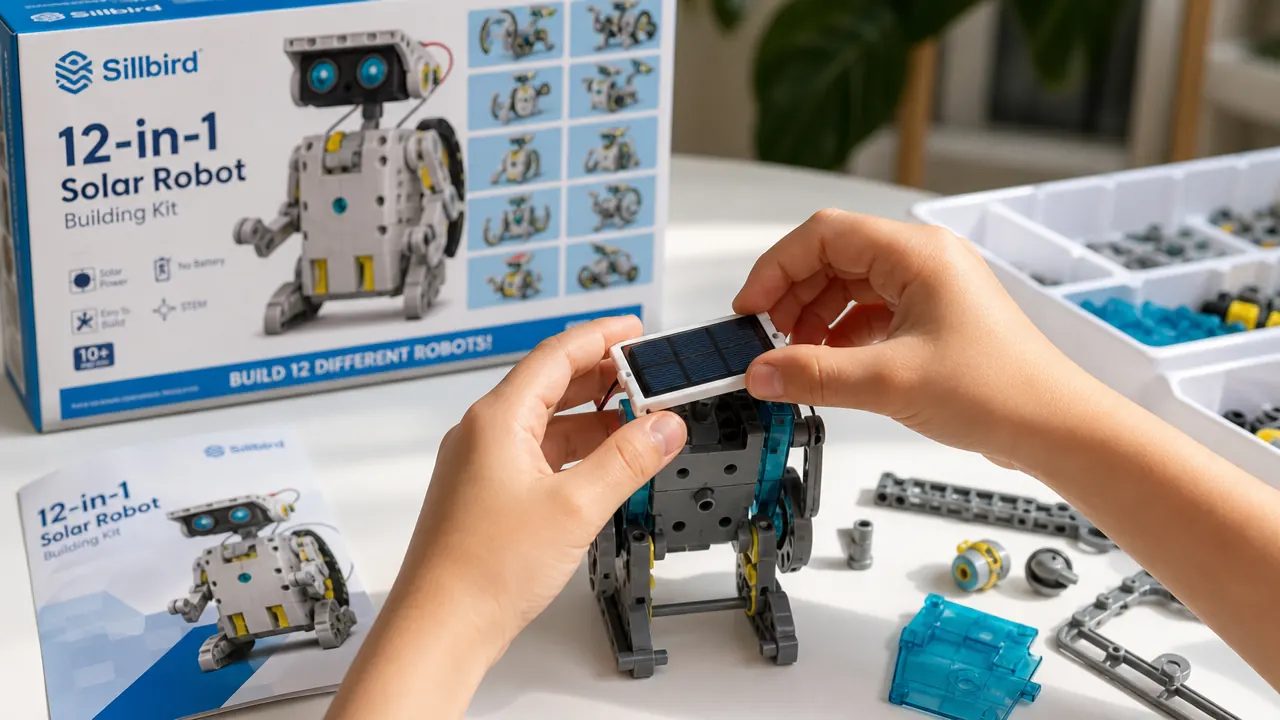
The Sillbird kit arrives in a cardboard tray with labeled sections for each part type. The plastic feels solid, not the brittle dollar-store variety that snaps under a child's grip. After three months of assembly and disassembly, I have not had a single piece crack. The gear teeth are holding up, which matters because repeated assembly is the whole point of a 12-in-1 kit.
The solar panel is the component I watched most carefully. It is a small monocrystalline panel soldered to two wires and a connector. After repeated plugging and unplugging, the connector on one of our units developed a slightly loose fit. It still works, but I can feel the wobble. I would not call it a defect at this price point, but parents should teach kids to handle the connector gently from the start.
We have lost four pieces total, all tiny gears that rolled off the table. The kit comes with some redundant pieces, so we have not been stopped by any missing part. This is good design for a product aimed at children.
When the finished crab skittered sideways across the counter in the first sunbeam, Marcus lost his mind in the best possible way. That moment cost about twenty dollars and forty-five minutes of a Sunday morning.
The Solar Mechanic: What Kids Actually Learn
Here is where I put on my teacher hat. The Sillbird kit is marketed as a STEM learning tool, and I want to be honest about what that means in practice. Children who complete several configurations are genuinely learning mechanical principles: gear ratios, how changing gear size affects speed and torque, how a motor converts electrical energy to movement, and how solar panels function as an energy source. These are not trivial concepts. They appear in third- and fourth-grade Next Generation Science Standards.
That said, the learning is not automatic. A child can assemble every configuration and still not understand why the crab moves faster than the boat if nobody explains the gear train. The kit rewards parents or teachers who engage with the builds. If you hand a child the box and walk away, they will build, enjoy it, and retain almost nothing. If you sit with them and ask questions, "why do you think these two gears are different sizes?" the kit becomes a real teaching tool.
Marcus now explains the concept of gear ratios to our cats, completely unprompted. I count that as a win.
Sunlight Dependency: The Real Limitation
The solar-only power model is genuinely limiting if you live somewhere with overcast winters or if your child wants to play at night. We are in the Pacific Northwest. From mid-November through February, we get about four hours of usable direct sunlight on a good day. During that stretch, Marcus had two or three sessions where he assembled a robot, carried it to the window, and watched it sit motionless for five minutes before giving up.
A few reviewer workarounds I have tried: a bright LED grow lamp works reasonably well as a substitute, especially for the faster configurations. A regular incandescent bulb at close range also generates enough current to get the motors moving, though more slowly. The kit includes no battery backup option, which is an intentional design choice but one that parents should know about before gifting.
My classroom has south-facing windows, so the sunlight issue was less acute there. At home in winter, it is a real friction point.

Instruction Manual: Honest Assessment
The manual covers all 12 configurations in a single booklet. The diagrams are exploded-view technical illustrations numbered step by step. For the first two or three configurations, the steps are clear and the illustrations are large enough to interpret easily. As you progress through the more complex builds, the diagrams shrink and some steps show four or five simultaneous assembly actions in a single panel, which is genuinely confusing even for a methodical adult.
Sillbird's website has video tutorials for some configurations, which helped when Marcus and I got stuck on the beetle build around step 19. I wish the kit included a QR code linking to those videos directly in the manual. That is a fixable problem and I hope Sillbird does it in future print runs.
Recommended age is 8 and up. I think that is accurate for a child who is patient and detail-oriented. For a child who builds fast and gets frustrated easily, I would say 10 and up is more realistic for independent building. Marcus at 8 can do it but needs me nearby for the harder steps.
What I Liked
- 190 genuine pieces that hold up to repeated assembly and disassembly over months
- 12 configurations provide real replay value, not just a one-build toy
- Solar mechanic teaches authentic STEM concepts: motors, gears, energy conversion
- Great for cooperative learning, the classroom test proved that clearly
- Priced at under twenty dollars, it overdelivers for the cost
- No batteries required means no scramble for AA cells on a Sunday morning
Where It Falls Short
- Completely unusable indoors on cloudy days without a lamp substitute
- Some mid-manual diagrams are small and hard to read for younger kids
- The solar panel connector develops slight looseness with heavy repeated use
- Learning is passive unless an adult engages with the builds actively
- Video tutorials exist but are not linked from the manual itself
Who This Is For
The Sillbird 12-in-1 is the right pick for a child between 8 and 13 who likes to build things methodically and has a curious, patient streak. It is especially well-suited for kids who have aged out of Duplo and basic snap-together sets but are not yet ready for full electronics kits with soldering. It works beautifully as a gift for a child who asks questions like "how does that work?" or who watches how-things-are-made videos voluntarily. My son is that kid, and this kit has been one of the best ten dollars I have ever spent at the end of a random Amazon browsing session.
It is also a legitimate classroom tool for STEM enrichment, grades 3 through 6. I can confirm from direct use that it generates the kind of productive struggle and peer collaboration that worksheets simply do not. If you are a teacher with a small budget and access to south-facing windows, this kit is worth every penny of the class set investment.
Who Should Skip It
Skip this one if your child is under 7, gets frustrated easily with small fiddly parts, or lives somewhere with very limited natural light and no interest in a lamp workaround. It is also not the right fit if you want an open-ended creative toy. The configurations are prescribed by the manual; there is no "build your own" freedom here unless your child invents that mode themselves. If your 8-year-old tends to abandon projects mid-build, expect the kit to live half-assembled in a box fairly quickly. This is a kit for finishers.
If your kid finishes what they start, this kit will keep them busy for months.
The Sillbird 12-in-1 Solar Robot Kit is rated 4.3 stars across more than 15,000 reviews. At the current price, it is one of the best STEM values on Amazon for elementary-age builders.
Amazon Check Today's Price on Amazon →